You come home, and you smell it before you even see it: a puddle on the carpet, at the foot of the bed, or in a corner of the living room. Your cat, usually so tidy, seems to have forgotten its litter box.
Rest assured: it is doing this neither out of spite nor on a whim. A cat that urinates outside its litter box is sending you a message. You just need to understand it.
First step: rule out a medical cause
This is the most important reflex. A urinary tract infection, cystitis, kidney stones, or joint pain can make the litter box unpleasant, or even painful. The cat then associates the place with pain and goes elsewhere.
Once medical causes have been ruled out, you must look at the litter box itself, and the environment.
The litter no longer suits them.
Cats are very demanding about their litter boxes. A few small details are enough to drive them away:
- It is not clean enough. Remove feces and urine every day, and change the litter completely on a regular basis.
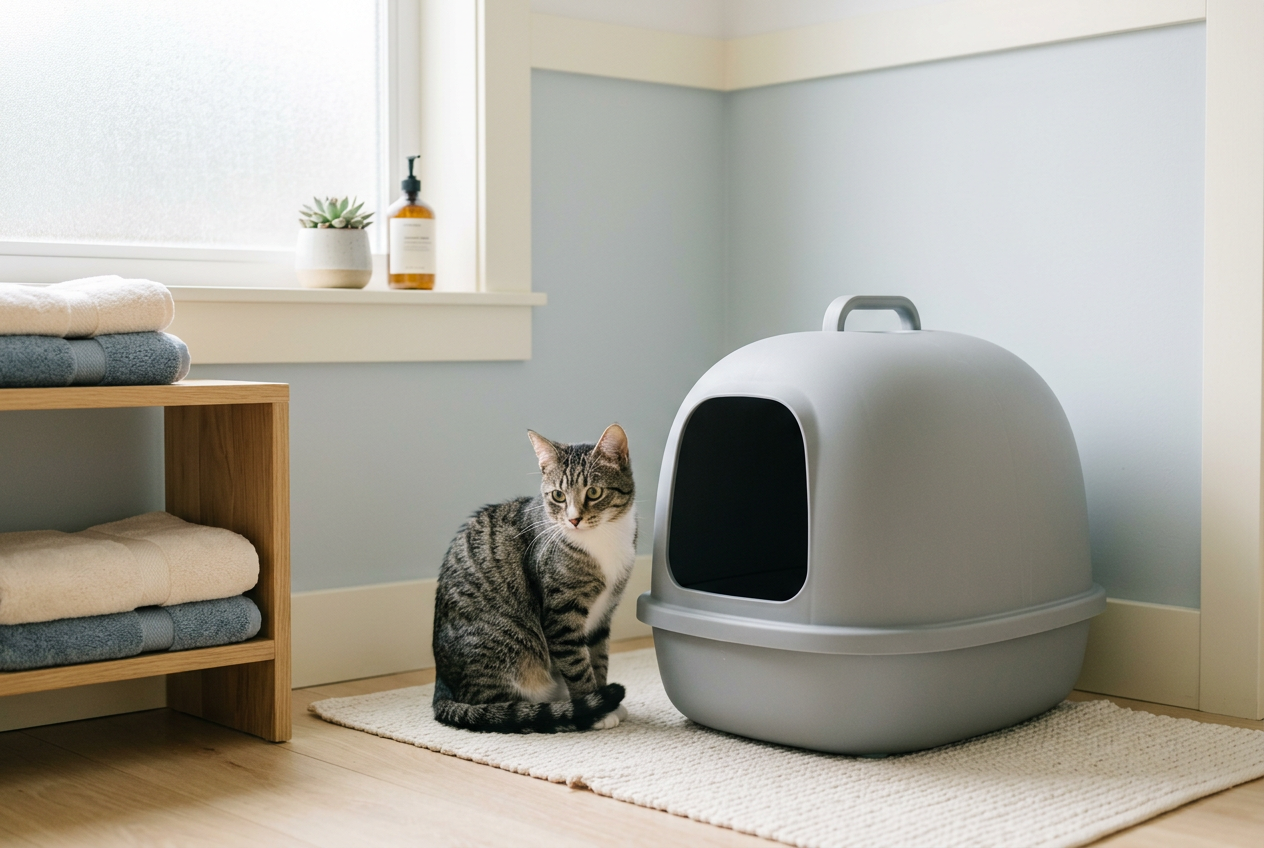
- It is poorly placed. Avoid high-traffic areas, the noise of the washing machine, or close proximity to their food bowl. A quiet corner where they can see who is approaching is ideal.
- It is too small or enclosed. Many cats prefer a spacious, open tray, about one and a half times the length of their body.
- The substrate has changed. A new type of litter, or scented litter, can be enough to bother them. Switch back to what they were used to.
- There are not enough of them. The usual rule: one litter box per cat, plus one. With two cats, provide three trays in different locations.
Stress, an often underestimated cause
When everything seems perfect regarding the litter box, stress is often the cause. The cat is a territorial animal: anything that disrupts its environment can lead it to mark its territory or have accidents.
The most common triggers:
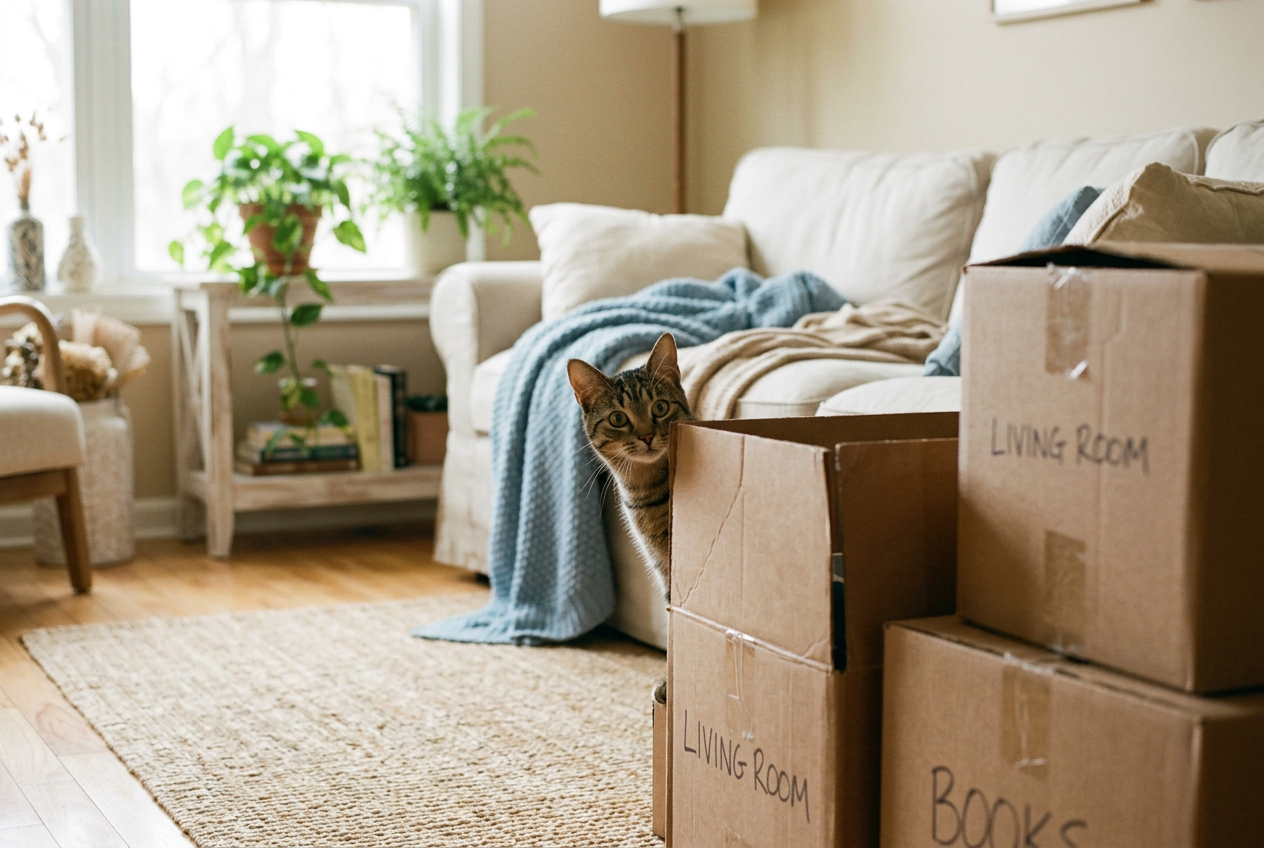
- moving house or renovations;
- the arrival of a baby, a new partner, or another animal;
- a neighborhood cat spotted through the window;
- tensions between cats in the household;
- a change in routine: new schedules, longer absences.
It is common for the cat to choose places that strongly smell of you, such as the bed, laundry, or the sofa. This is not a provocation: it is mixing its scent with yours to reassure itself.
What you can do starting today
Cleaning without leaving a trace
Use an enzymatic cleaner, which truly destroys odor molecules. Avoid bleach and ammonia-based products: their smell resembles that of urine and may encourage the cat to return to the same spot.
Making the area less attractive
Once clean, make the area less tempting: place their food bowl or a toy there, or cover it temporarily.
Never scold them
Punishing a cat after the fact teaches them nothing. They do not make the connection and simply become more stressed, which can worsen the problem.
Recreating a reassuring environment
Provide them with hiding spots, elevated areas, regular play sessions, and a stable routine. A calming diffuser plugged into the room where they spend the most time can complement these efforts by contributing to a more serene atmosphere.
In summary
A cat that urinates outside its litter box is not a "dirty" cat: it is often a cat in pain, one that finds its litter box uncomfortable, or one that is anxious. Start with your veterinarian, adjust the litter box, then work on its environment. With patience, most cats return to their good habits.
A more reassuring atmosphere for your cat
The Lovanima soothing diffuser plugs into the room where he lives and diffuses continuously, without fragrance.
Discover the diffuser