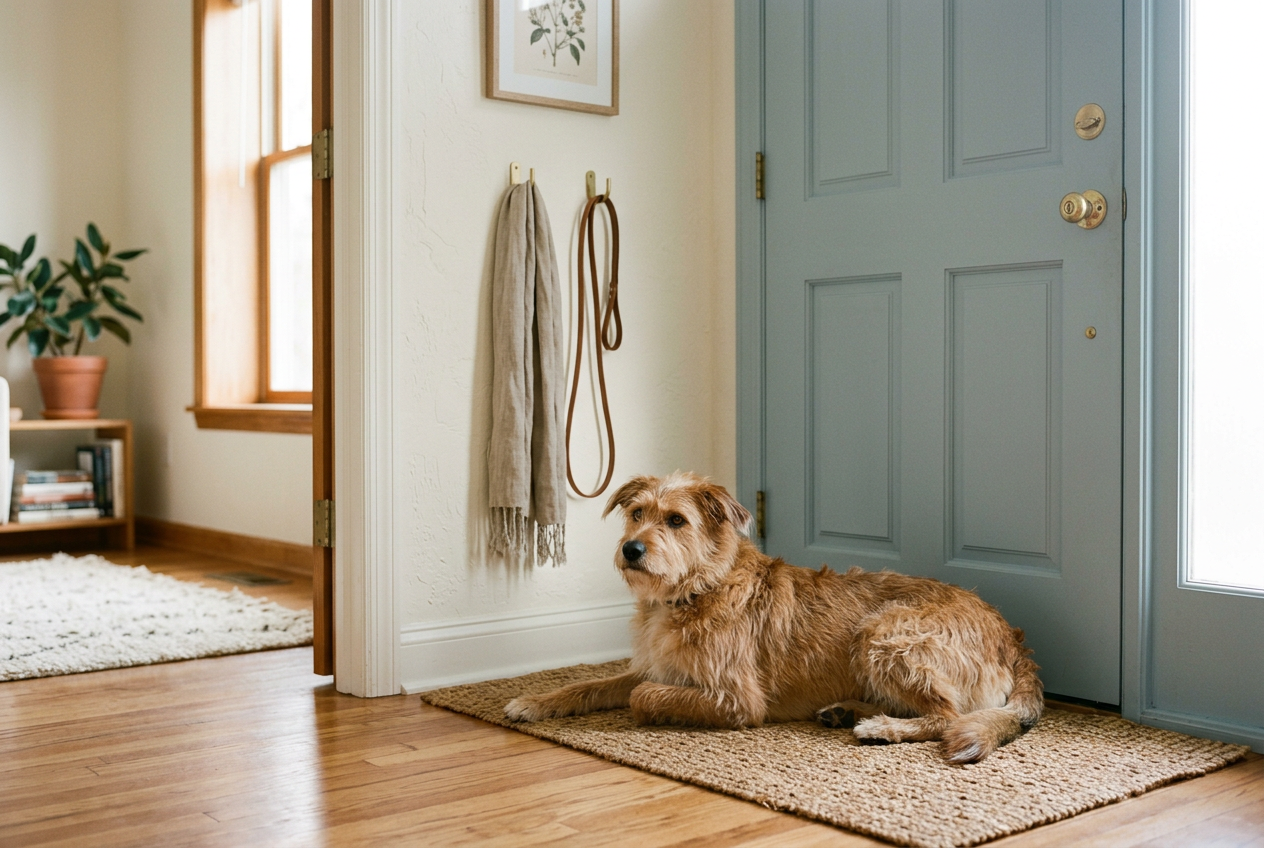
You close the door, and the barking begins. Upon your return, a ripped-up cushion, a scratched door, sometimes an accident. Your neighbors tell you about it.
Your dog is not "badly behaved": they are afraid of being left alone. Good news, this can be worked on, with method and patience.
How to recognize a dog that struggles with being alone
The signs appear mainly when you are away, or just before you leave:
- he barks, howls, or whines after you leave;
- he destroys objects, often near doors and windows;
- he relieves himself even though he is house-trained;
- he pants, drools, or paces in circles;
- he follows you everywhere in the house and becomes agitated as soon as you pick up your keys;
- he greets you in a very excessive way upon your return.
Why some dogs struggle with being alone
The dog is a social animal, very attached to its human. Certain moments make solitude more difficult:
- a change in routine, for example a return to the office after a long period at home;
- a move;
- a recently adopted dog that has already experienced abandonment;
- a frightening event that occurred during an absence, such as a thunderstorm or construction work.
What you can do, step by step
1. Downplay departures and returns
Leave and return calmly, without long goodbyes. Ignore him for a few minutes upon your return, then greet him once he has calmed down. The message: leaving and coming back is normal.
2. Desensitize to departure cues
Pick up your keys, put on your coat… then stay. Repeat this several times a day. These gestures will gradually lose their power to cause anxiety.
3. Gradually get them used to being alone
Start with a few seconds behind a closed door, then a minute, then five. Only increase the time when they remain calm. It is better to move slowly than too quickly.
4. Tire them out before leaving
A good walk and some playtime before you leave will help them rest while you are away.
5. Leave them with an activity
A treat-dispensing toy, a snuffle mat, or a chew bone gives them something enjoyable to do and associates your departure with a positive experience.
6. Create a space just for them
A bed in a quiet spot, with a blanket that smells like you, helps them feel secure. A calming diffuser plugged into that room can help create a more reassuring environment.
7. Never punish them
Scolding a dog for something they did while you were away only increases their anxiety. They do not understand the connection.
How long does it take?
It depends on each dog. Some progress in a few weeks, others need several months. Consistency is key: small daily exercises are better than one big occasional effort.
In summary
A dog that is afraid when left alone needs reassurance, not punishment. Calm departures, gradual absences, physical exercise, mental stimulation, and a safe space: these simple actions, repeated with patience, help it regain confidence.
A more serene atmosphere, even when you are not there
The Lovanima soothing diffuser works the same way as it does for cats. It plugs into their favorite corner and diffuses continuously, fragrance-free.
Discover the dog version